
How Do I Practice Conversations in Another Language?
Reading rules and memorizing word lists only gets you so far — at some point you need to follow a real exchange between two or more speakers and respond to it. Scene conversations are Scribe Origins' answer: full dialogue scenes with characters, backgrounds, audio, and choices, all built on the same review system as your flashcards.
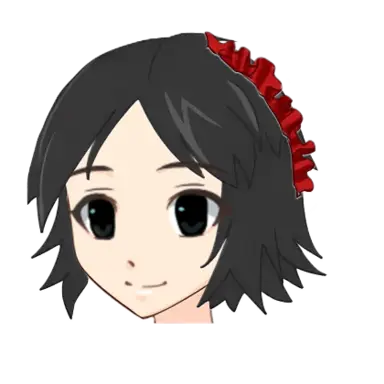
If you've been asking yourself how do I practice conversations in another language without just reading a phrasebook, a scene conversation is the closest thing Scribe Origins has to a real exchange. This kind of language conversation practice plays out one line at a time against a scene background, with character sprites standing in for each speaker. Every line has its own audio, so you hear the sentence spoken as well as read it — listening and reading happen together, not as two separate steps. Lines marked as your turn are the ones you answer: instead of reading silently, you pick your character's response from a set of multiple-choice options. Get it right and the scene continues; get it wrong and you see the correct line before moving on, which turns a static dialogue script into something closer to a light visual novel where you're actively choosing your side of the exchange rather than passively watching it unfold.
This matters more than it sounds. Textbook dialogues are usually read once and forgotten. A scene conversation is reviewed — every line you see becomes a tracked item that comes back to you later, at the right interval, the same way a flashcard does. So the dialogue you practiced today about ordering coffee doesn't just disappear after one read-through; it resurfaces in your review queue days or weeks later, right when you're about to forget it.

Scenes
Characters, expressions, and scene backgrounds
Each scene draws from a library of 20 scene backgrounds — everyday settings like a café, a train platform, or a classroom — so the conversation has visual context instead of floating on a blank screen. Characters are positioned left or right depending on who's speaking, and a scene can involve more than one character at once, not just you and a single tutor. Character sprites change expression to match the tone of the line — each tutor ships 7 expressions (surprised, smiling, concerned, and more) — so the scene reads emotionally, not just textually. That combination of setting, positioning, and expression is what makes do scenes teach real dialogue a fair question to ask, and the honest answer is yes: these aren't disconnected sentences, they're staged exchanges between characters who react to what's being said.
Gameplay
Multiple choice, audio, and pacing
On your turn you're shown answer options — 2, 3, or 4 choices, configurable in settings — and pick the one that fits. Correct answers flash green and add to your score; incorrect answers flash red with a floating score change, then reveal the right line so you still see the correct dialogue either way. Every line's audio can play at normal or slow speed, subtitles can show the native text, the translation, or both, and lines can advance automatically or wait for you to tap to continue, depending on the require tap to continue toggle.
Beyond the dialogue audio itself, scenes layer in extra sound design you can tune independently:
- Correct, incorrect, and completion sound effects, each with its own on/off toggle
- Generated background music that follows the active theme and language
- Generated ambient soundscapes layered under the music
- A Scene lesson notes toggle that shows or hides an explanation card for the lesson
None of this is required to play — you can mute everything and just answer — but the layered audio is what makes the scene feel like a place instead of a quiz screen.
Listening
How does listening practice work?
Because every line of dialogue carries its own audio clip, listening practice isn't a separate mode you have to seek out — it happens automatically every time a scene runs. Set the audio speed to slow while a lesson is still new, then switch back to normal once the rhythm of the sentence feels familiar. Subtitles are independent of audio speed: choose reading (native text), translation, or both, so you can start with both showing and gradually hide the translation as your ear catches up to the script. Because each line is also a tracked sentence-level review item, the lines you struggle to understand by ear come back to you more often — the review schedule adapts to what you're actually getting wrong, not just what you've seen once.
Progression
Progression: levels, unlocking, and rank
Scene lessons are organized into levels, and a lesson stays locked until the one before it reaches 50% completion — building a foundation before harder scenes. Correct answers earn score toward your session and lifetime totals, shown on a five-rank ladder. Difficulty is also gated by your chosen skill level (beginner, intermediate, or advanced), set once in Settings and applied automatically whenever a scene session is built.
Here's what a typical scene lesson's progression looks like, start to finish:
- Open an unlocked lesson from the scene lesson list.
- Play through the dialogue, answering each of your marked turns.
- Watch correct/incorrect feedback flash and your score update live in the HUD.
- Reach the end of the lesson and see the completion screen: accuracy, score, duration, new-versus-review counts, combo, and rank progress.
- Once the lesson crosses 50% completion, the next lesson in the level unlocks.
The completion screen isn't just a scoreboard — it's a snapshot of what actually happened during the lesson, which is useful if you're deciding whether to replay it in Scene Preview before moving on.
Review
How conversations reinforce vocabulary and sentence review
Every conversation line is tracked as its own sentence-level item in the same spaced-repetition system that schedules your flashcards, vocabulary, and character reviews — there's no separate "conversation progress" apart from the rest of the app. Answering a line correctly updates that sentence's shared review record exactly like rating a flashcard would, and the individual vocabulary words inside the line are reinforced too, surfaced as keyword chips on the lesson's detail pages and scene previews. This is why a word you've been struggling with in flashcards can show up again inside a scene: it's the same review queue surfacing the same item through a different mode, not a coincidence.
Per-lesson statistics make this shared record visible while you're studying, not just after you finish: each scene lesson page shows progress, accuracy, due count, remaining lines, rank, and lifetime score, all sourced from the same records that drive your flashcard due count on the home screen.
Modes
Three ways to play a scene
There's more than one way to answer how do I practice conversations in another language depending on what you need that day. Scene Conversation is the main mode — you answer every one of your turns and the scene branches on the result. Scene Preview plays the identical dialogue read-only with no quizzing, useful for previewing a lesson before studying it properly, or for a pure listening pass. Scene Random pulls individual lines out of order from across your already-unlocked lessons, mixing them together for broader review once you've built up a few completed lessons.
| Mode | You answer? | Best for |
|---|---|---|
| Scene Conversation | Yes, every turn | First pass through a new lesson |
| Scene Preview | No, read-only | Previewing or a focused listening pass |
| Scene Random | Yes, mixed order | Review across already-unlocked lessons |
Languages
Available languages
Scene conversations currently cover Japanese, Chinese (Simplified and Traditional), and Cantonese, each with its own lessons built around everyday situations — ordering food, asking directions, meeting someone new. Lesson count varies by language, but the mechanics — line-by-line playback, multiple choice, audio, and shared review records — work the same way across all of them.
Frequently asked questions
How do I practice conversations in another language?
In Scribe Origins you practice conversations in another language through scene conversations: line-by-line dialogue played out against a scene background with character sprites, where you pick your character's next line from multiple-choice options instead of just reading a static script. Each line has its own audio, so you hear the sentence and read it at the same time, and lines marked as your turn are the ones you answer.
Why can I understand a language but not speak it?
Understanding relies on recognition, while speaking requires you to retrieve and assemble a response quickly. Practice two-turn scene pairs: hear a prompt, pause, say any suitable answer before looking at the choices, and then compare your response with the model line. Repeating familiar sentence frames helps you stop translating in your head word by word.
Do scenes teach real dialogue?
Yes. Scene lessons are built from real conversational exchanges, not isolated vocabulary lists — ordering food, asking directions, meeting someone new — with multiple characters taking turns and character expressions changing to match the tone of each line. Keyword chips extracted from each sentence link the dialogue back to individual vocabulary, so real dialogue and single-word study reinforce each other instead of living in separate silos.
What are the three scene conversation modes?
Scene Conversation is the standard mode where you choose an answer for every one of your turns. Scene Preview plays the same dialogue read-only, without quizzing you, useful for previewing a lesson before studying it. Scene Random pulls conversation lines out of order across your unlocked lessons for mixed review.
How does scene conversation progression and unlocking work?
Lessons unlock in order. A lesson stays locked until the lesson before it reaches 50% completion, so you build a foundation before moving on to harder scenes. Each answer also earns score toward a five-rank ladder, and the lesson's completion screen shows accuracy, score, duration, new-versus-review counts, and combo alongside your rank progress.
Do scene conversations use the same review record as flashcards?
Yes. Every conversation line is a sentence-level item with its own shared spaced-repetition record, the same record system flashcards and other games use. Answering a line correctly in a scene reinforces that sentence's due date exactly like rating a flashcard would, and the vocabulary inside that line benefits too.
Which languages have scene conversations?
Scene conversations are available for Japanese, Chinese (Simplified and Traditional), and Cantonese, each with its own set of scene lessons covering everyday situations like ordering food, asking directions, and casual small talk. Lesson and line counts vary by language, but the mechanics work the same way across all of them.
Practical workshop
How do I practice conversations in another language step by step?
The most useful answer to how do I practice conversations in another language is to repeat one short scene with a different purpose on each pass. A single careful dialogue can train comprehension, pronunciation, recall, and flexible response. Racing through five new scenes usually creates more recognition than usable speaking skill.
Pass one: understand the situation
Preview the scene and identify who is speaking, where the exchange takes place, and what each person wants. Keep native text and translation visible, use slow audio when necessary, and pause after every line. Your task is not to memorize yet. Write down only the two or three phrases that carry the exchange, such as the request, the answer, and the polite closing.
Pass two: listen before reading
Replay the same scene at normal speed. Hide the translation and look away from the native text for the first listen to each line. Predict the meaning, then check the subtitle. If one line remains unclear, replay that line rather than restarting the entire scene. This makes listening practice diagnostic: you learn whether the obstacle is a missing word, unfamiliar sound change, or sentence structure.
Pass three: produce your side
When your character's turn appears, say an answer aloud before looking at the choices. The spoken answer does not have to match the scripted line word for word; it needs to express the same intention. Then choose the closest option, listen to the model line, and repeat it once with the same rhythm. This is the most important pass when your real question is how do I practice conversations in another language rather than how to recognize dialogue on a screen.
Worked example
What does a focused conversation-practice session look like?
Imagine a café scene in which one person orders a drink, the server asks a follow-up question, and the customer confirms the order. A useful 15-minute session can look like this:
- Minutes 1–3: preview the whole exchange with both subtitle lines visible and identify the three communicative jobs: ordering, clarifying, and confirming.
- Minutes 4–7: replay with translation hidden and mark which line you could not follow by sound.
- Minutes 8–11: answer every customer turn aloud before choosing an option. Substitute a different drink, size, or quantity where the grammar allows it.
- Minutes 12–14: use Scene Preview and shadow the customer lines, beginning just after the recording starts instead of waiting for it to finish.
- Minute 15: close the script and summarize the exchange from memory in any language. If you can name the sequence but not reproduce every line, the scene still taught a usable conversational pattern.
The substitution step matters because memorized dialogue is brittle. If you can replace one detail while preserving word order, particles, politeness, or agreement, you are beginning to control the pattern rather than merely recite it.
Troubleshooting
Why can I understand a language but not speak it?
Recognition is faster than production. You may understand a line when the words are visible but still need several seconds to build a reply. Reduce the scene to two-turn pairs: hear one prompt, pause, say any suitable response, and only then reveal the scripted answer. Repeat until the response begins without translating every word internally.
What if the audio feels too fast?
Use slow audio only long enough to identify the missing sounds, then return to normal speed. Compare the written form with what you actually hear: syllables may join, vowels may weaken, or particles may be quieter than dictionary recordings. Loop one difficult line three times, speak with it once, and then hear it once without text.
What if I keep choosing the wrong response?
Classify the mistake. A vocabulary mistake means you did not know a key word. A grammar mistake means you knew the words but misread their relationship. A situation mistake means several answers were grammatical but only one fit the speaker's intention. Save unknown vocabulary to review, consult the relevant grammar guide for a structural mistake, and reread the previous turn for a situation mistake.
How often should I repeat the same scene?
Repeat while the scene is still changing what you can do. A productive pattern is one careful first session, a short replay the next day, and another replay after the lines return through spaced review. Stop drilling when you can understand at normal speed and produce an appropriate answer without relying on the choices. At that point, move to a new scene with the same social task so that the skill transfers.
That repeat-and-vary process is the practical answer to how do I practice conversations in another language: understand one exchange, retrieve your side, vary a detail, and revisit it after a delay.
Conversation learning questions
How can I stop translating in my head when speaking another language?
Learning how to stop translating in my head starts with short meanings you can retrieve directly: greetings, requests, clarification phrases, and familiar sentence frames. Hear the prompt, picture the situation, and produce a complete phrase without constructing it word by word in English. Translation usually decreases as common sequences become single retrievable units.
Use the same scene several times. First confirm meaning with translation, then hide it, then answer before the choices appear. If you still need English, shorten the response until it can begin immediately. Speed grows from familiar patterns, not from forcing yourself to think faster through an unfamiliar structure.
How can I practice speaking a language when I am alone?
Use scene prompts as one side of an exchange. Pause after each line and answer aloud before revealing the scripted response. Retell the scene from another character's perspective, substitute a new item or place, and record one pass. A useful solo session contains a prompt, an attempted response, a model, and a corrected repetition.
Describe visible actions during the day using language already studied. Keep the task narrow: where you are going, what you need, what happened, or what you will do next. Repetition of basic structures builds access speed without requiring invented complex topics.
How do I improve listening comprehension in real conversations?
Diagnose what disappears. If you know the written sentence but not the audio, compare the recording with the text and mark linking, reduction, tone, stress, or sound changes. If both forms are unclear, learn the vocabulary or grammar first. If you understand individual lines but lose the exchange, practice predicting the next speaker intention.
Move from slow audio to normal speed, from both subtitles to native text, and finally to audio first. Repeat short sections rather than replaying a long scene without identifying the difficult moment. Listening improves when each replay has a different question.
How do I feel less nervous speaking a new language?
Prepare repair phrases before ambitious conversation: “Please say that again,” “Do you mean…?”, “I don't know the word,” and “How do you say…?” These phrases keep the exchange moving when memory fails. Practice them inside scenes until they are easier to retrieve than silence.
Set a small success condition, such as asking one clear question or completing a two-minute exchange. Anxiety often grows when the task is “speak perfectly.” A bounded task makes errors expected evidence rather than proof that the whole conversation failed.
Practice frequency
How often should I practice speaking and conversation?
Short, frequent speaking is useful for access speed, while longer conversations reveal gaps in comprehension and discourse. Aim for several brief response sessions during the week and at least one extended exchange or role-play appropriate to your level. A beginner can begin with five-minute scene responses; advanced learners need less predictable topics and speakers.
Repeat a task after feedback, then revisit it after a delay. Speaking every day without correction can stabilize errors, while waiting for perfect grammar delays production. Balance attempted conversation, focused repair, and another attempt under slightly changed conditions.
How was this Conversations guide checked?
The workflow and control names were checked against the current Scribe Origins Conversations interface. Learning guidance is separated from product behaviour.
- Scribe Origins editorial standards — how product claims, examples, sources, and corrections are handled.